UX/UI design cost for a SaaS or app in 2026: $3,000 to $120,000, by scope

TL;DR UX/UI design for a SaaS product or an app costs between $3,000 and $120,000 at US agency rates in 2026. A UX audit sits at the bottom, discovery with a clickable prototype costs $6,000 to $24,000, the design of an MVP $15,000 to $52,000, and the full design of a SaaS platform $40,000 to $120,000. The number of kinds of users is honestly what moves the price the most.
- A UX audit of an existing product takes about 30 to 80 hours, so roughly $3,000 to $12,000 at US agency rates.
- Discovery with a clickable prototype takes about 60 to 160 hours, so roughly $6,000 to $24,000.
- The design of an MVP, with a design system, takes about 150 to 350 hours, so roughly $15,000 to $52,000.
- The full design of a SaaS platform with roles, billing and an admin takes about 400 to 800 hours, so roughly $40,000 to $120,000.
- Testing a prototype with five users finds most usability problems, so research does not have to be the expensive part.
In this article
- What UX/UI design costs in 2026
- Where the hours go in an MVP's design
- What changes the price the most
- Is user research worth paying for?
- What design costs after launch
- How long it takes
- What makes design cost more than planned
- Design and development with one team or two?
- What to prepare before you ask for a quote
- When we are not the right fit
- How to get a number for yours
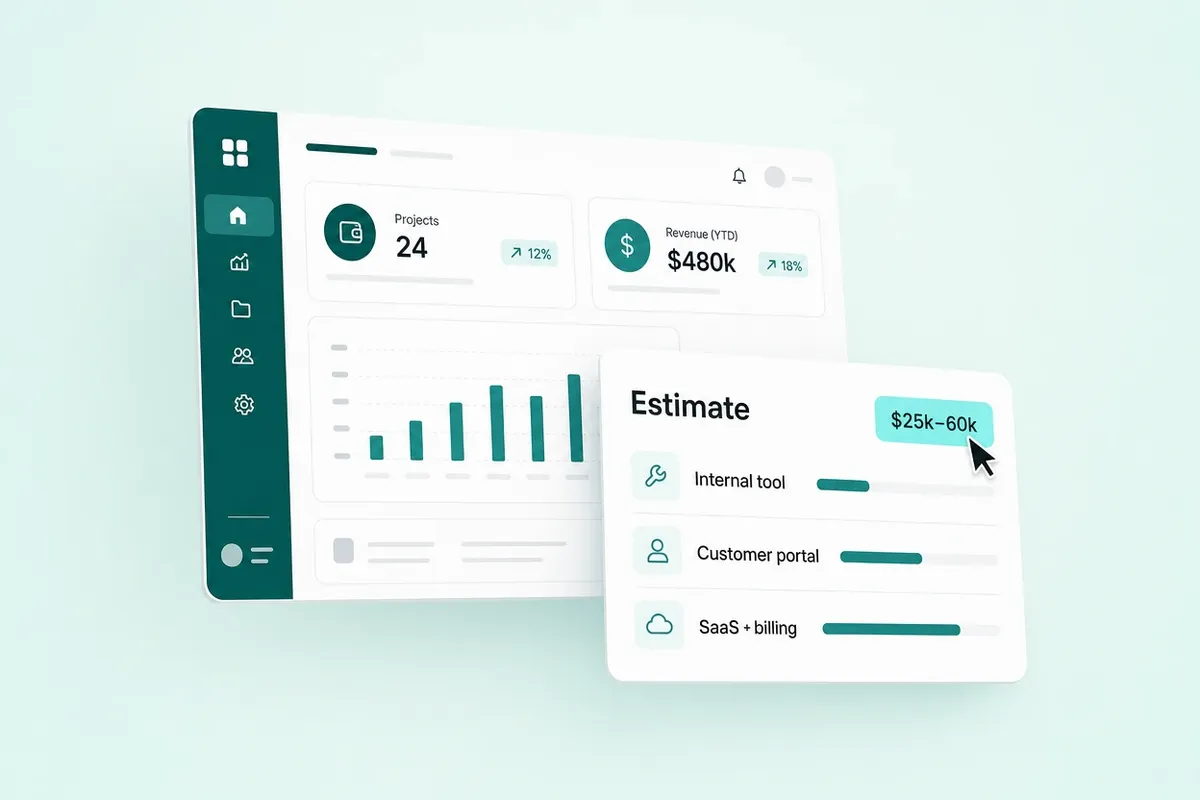
UX/UI design for a SaaS product or an app built by a US agency in 2026 costs between $3,000 and $120,000, depending on whether you need a review of a product you already have, the design of a first version, or the full design of a product with several kinds of users.
A UX audit of an existing product sits at the bottom of that range, discovery and a clickable prototype costs $6,000 to $24,000, the design of an MVP usually lands at $15,000 to $52,000, and the full design of a SaaS platform with roles, billing and an admin runs $40,000 to $120,000.
Honestly, most design cost guides give a range with nothing behind it, so this one breaks the hours down line by line, explains what moves the price, and uses two products we designed as the examples. It also covers what design costs after launch, because the design files and the design system are something you keep paying attention to.
Design systemThe shared set of colors, type, spacing and components that every screen of a product is built from, kept in the design files and mirrored in the code, so new screens look consistent and take a fraction of the time.
What UX/UI design costs in 2026
The hours below come from the design work I have scoped and shipped with the team at Axtra Studios, and the dollar column is those same hours priced at what US agencies charge for UX/UI design, which Clutch puts at $100 to $149 an hour. The MVP and platform rows end with designs a developer can build from, with every screen and every state drawn.
| What you get | Time | Hours | At US agency rates |
|---|---|---|---|
| A UX audit of a product you have: every screen reviewed, problems ranked by what they cost you | 1 to 2 weeks | 30 to 80 | $3,000 to $12,000 |
| Discovery: interviews, a flow map and a clickable prototype tested with users | 2 to 3 weeks | 60 to 160 | $6,000 to $24,000 |
| The design of an MVP: one core flow, every state and a design system | 3 to 6 weeks | 150 to 350 | $15,000 to $52,000 |
| The full design of a SaaS platform with several roles, billing and an admin | 8 to 14 weeks | 400 to 800 | $40,000 to $120,000 |
What UX/UI design costs for a SaaS product or app in the US, 2026 · Source: Time and hours from Axtra Studios projects. Rates from Clutch's UX/UI design pricing guide (US agencies, $100 to $149 an hour; updated September 21, 2026). Checked October 6, 2026.
For a second opinion, Clutch's UX/UI design guide puts the average UX project reviewed on its site at about $84,973, which lands in the top row, and the most common budget at $10,000 to $49,999, which is the discovery and MVP rows.
The jump between the rows is mostly the number of people the product serves. An MVP usually has one kind of user doing one main job, while a full SaaS platform has admins, team members, billing and settings, and each of those is its own set of screens with its own states.
Where the hours go in an MVP's design
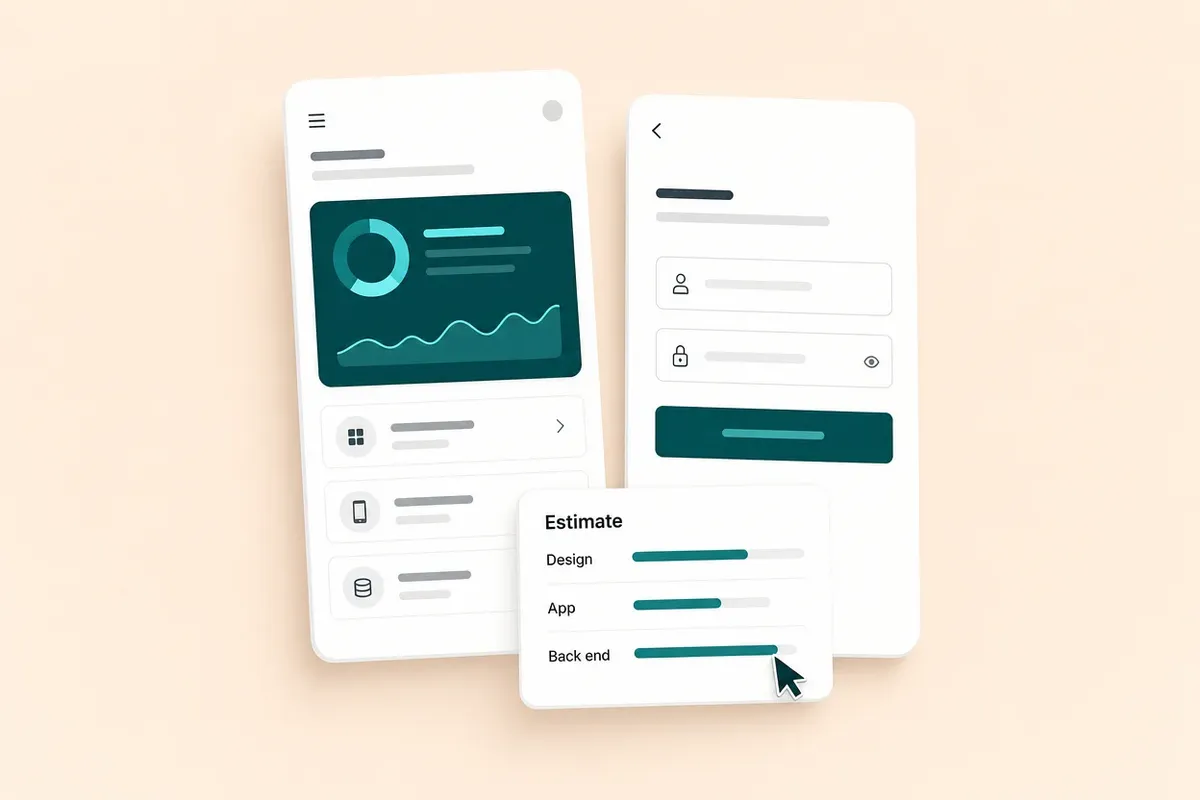
Here is the MVP row broken down, which is the design of a first version with sign-in, one core flow, an account area and the design system underneath it. The total comes to 150 to 350 hours, and the split below is roughly how those hours land on our projects.
| Line item | Hours | At US agency rates |
|---|---|---|
| Discovery and user interviews | 20 to 40 | $2,000 to $5,960 |
| Flow map and information architecture | 15 to 30 | $1,500 to $4,470 |
| Wireframes and a clickable prototype | 25 to 60 | $2,500 to $8,940 |
| Usability tests with five users | 10 to 25 | $1,000 to $3,725 |
| UI design for every screen and every state | 50 to 120 | $5,000 to $17,880 |
| The design system: tokens and components | 20 to 50 | $2,000 to $7,450 |
| Developer handover and design review of the build | 10 to 25 | $1,000 to $3,725 |
Where the hours go in the design of an MVP · Source: Hours from Axtra Studios projects, totalling 150 to 350. Rates from Clutch's UX/UI design pricing guide (US agencies, $100 to $149 an hour). Checked October 6, 2026.
The UI design is the biggest line, but the lines before it are what make it fast. When the flows are mapped and tested on a clickable prototype first, the screens get designed once, and the expensive part of design is basically redesigning screens that were drawn before anyone knew what they had to do.
The design system is the line founders question most, and it is the one I would cut last. It is the set of colors, type, spacing and components every screen is built from, and it is why the tenth screen takes a fraction of the time of the first, both in design and later in code.
What changes the price the most
The biggest factor is how many kinds of users the product has. Boomerangme is a good example, since it is a loyalty platform that has to work for a café owner, an agency reselling it under its own logo and a franchise head office, so we designed it around those three roles, with one database and a different surface for each.
The second is how much of the product is data. Dashboards, reports, charts and tables take longer than forms, because every one of them has an empty state, a loading state and a state with far too much data in it. Kite, an assessment platform we designed and built for consulting firms, ends in a report a consultant would sign, so the report itself was designed as carefully as the app.
After that it is the platforms. Designing for the web and for a phone is not double the work, since the design system and the flows carry over, but every screen still has to be laid out again for a small screen and a thumb, so it adds real time to the screen design.
Is user research worth paying for?
For most products, yes, and it costs less than people expect. Jakob Nielsen's well-known finding at Nielsen Norman Group is that testing with five users uncovers most of the usability problems in a design, and that three small rounds of five are worth more than one big study.
So the research in our MVP row is small on purpose. A handful of interviews before the flows are drawn, and two or three short rounds of tests on the clickable prototype, which usually catch the problems that would otherwise reach your developers or, worse, your first customers.
What design costs after launch
The design keeps living after launch, so it is worth budgeting for. Figma, which most product teams use, charges $16 a month for a full seat on its Professional plan and $12 a month for a developer seat, so the tool itself is a small line.
The bigger cost is design time as the product grows. New features need screens that fit the system, and the system needs updating when the product changes, and in my experience that is usually 20 to 60 hours a month for a product in active development, so roughly $2,000 to $9,000 at US agency rates.
How long it takes
A UX audit usually takes one to two weeks, and discovery with a clickable prototype two to three weeks. The design of an MVP usually takes three to six weeks, and the full design of a SaaS platform eight to fourteen weeks, while Clutch's guide puts a typical UX project at about ten months.
We run design and development in parallel in two-week sprints, so the first screens go to developers while later ones are still being designed. That is a big part of why the timeline stays short, since nobody waits for a finished design file before building starts.
What makes design cost more than planned
The most expensive mistake I see is designing screens before the flows are agreed. It feels faster to start with the interface, but every change to a flow then means redesigning screens that were already finished, and that is honestly where most overruns come from.
The second is leaving the states until the end. Empty, loading, error and offline screens are a large share of any product, and when they are not designed, developers end up guessing, which looks unfinished and usually costs more to fix later than to design now.
The third is unclear decisions. When feedback comes from several people with no one making the final call, each round reopens the last one, so it really helps to name one person who decides before the first review. And the fourth is skipping the design system to save money, which saves a little in design and costs a lot more in development.
Design and development with one team or two?
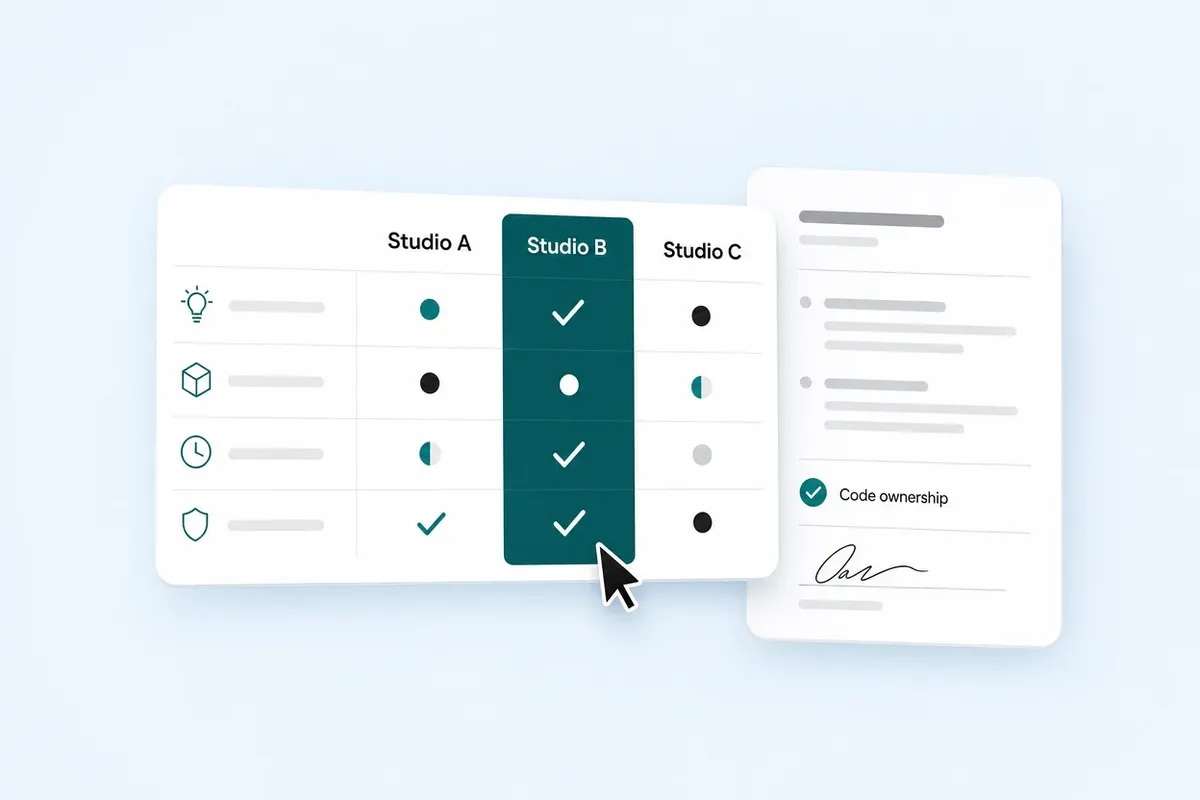
You can hire a design studio and a development team separately, and it works well when both are strong and talk to each other. The cost is in the handover, since designs that were never checked against how they will be built often need a second pass once development starts.
With one team the designers and developers work from the same design system, and the developers can say early when something will be slow or expensive to build. Either way the designs should sit in your own Figma, so you can take them to anyone, and our guide to choosing a development studio covers the questions to ask.
What to prepare before you ask for a quote
You will get a much more accurate number if you can describe who the product is for, the one job they come to it for, and how many kinds of users it has. Screenshots of products you like, and of your current product if there is one, are worth more to an estimate than a long feature list.
It also helps to know whether you have a brand already, which platforms the product needs, and who will make the final decisions on design. Our design brief checklist is a plain spreadsheet with the questions that move the price the most, and it is just as useful for comparing studios as it is for a quote.
When we are not the right fit
If you only need a logo or a visual identity, our brand identity work fits that better than a product design engagement. And if your budget is under a few thousand dollars, a good template or a UI kit will honestly get you further than custom design for a first version.
Where we fit is the middle of this page, so product design for a SaaS product or an app, from discovery to a design system your developers can build from, and ideally built by the same team.
How to get a number for yours
The table will tell you which row you are in, and a short call will tell you where in that row you land. We can look at your product, who it is for and what it has to do, and send you a written scope priced in milestones.
If the design is part of a bigger build, our guides to web app cost in 2026, mobile app cost in 2026 and MVP cost and timeline cover the development side, and our SaaS expertise page has more of the work behind this guide.
Rates and market figures come from Clutch's UX/UI design pricing guide, the testing finding from Nielsen Norman Group's Why You Only Need to Test with 5 Users, and tool prices from Figma's pricing page, all checked on October 6, 2026. Everything here follows our editorial policy.